How to Identify a Genuine Antique Oriental Rug: What Whitefish Bay, WI, Buyers Should Know
Knowing how to spot a genuine antique Oriental rug can protect Milwaukee-area buyers from overpaying for a reproduction or misidentified piece. This guide covers the key markers of authenticity, from age classification to knot construction, dye type, and regional provenance, along with the red flags that signal a modern copy. Whether you inherited an antique Oriental rug or are considering a purchase near Whitefish Bay, these practical details can help you make a confident, informed decision.
Understanding Age Classifications Before You Shop
Industry convention classifies a rug as "antique" when it is at least 100 years old. Pieces between roughly 50 and 99 years old are "semi-antique," while those 20 to 49 years old are "vintage." A rug sold simply as "old" without one of these terms deserves closer scrutiny. Ask sellers to specify which category applies and, when possible, request documentation that supports the claim.
Semi-antique and vintage rugs can be beautiful, collectible, and valuable. However, sellers sometimes use "antique" loosely, leading buyers to pay a premium for pieces that do not technically qualify. Knowing the distinction gives you a starting point for every conversation.
How to Read Knot Density and Construction
Knot density is one of the most reliable indicators of quality and origin. It is measured in knots per square inch (KPSI). To get a rough sense of density, fold a corner of the rug back and count the knot rows along one inch of the warp. A low count does not make a rug inauthentic, but it tells you something about its likely origin.
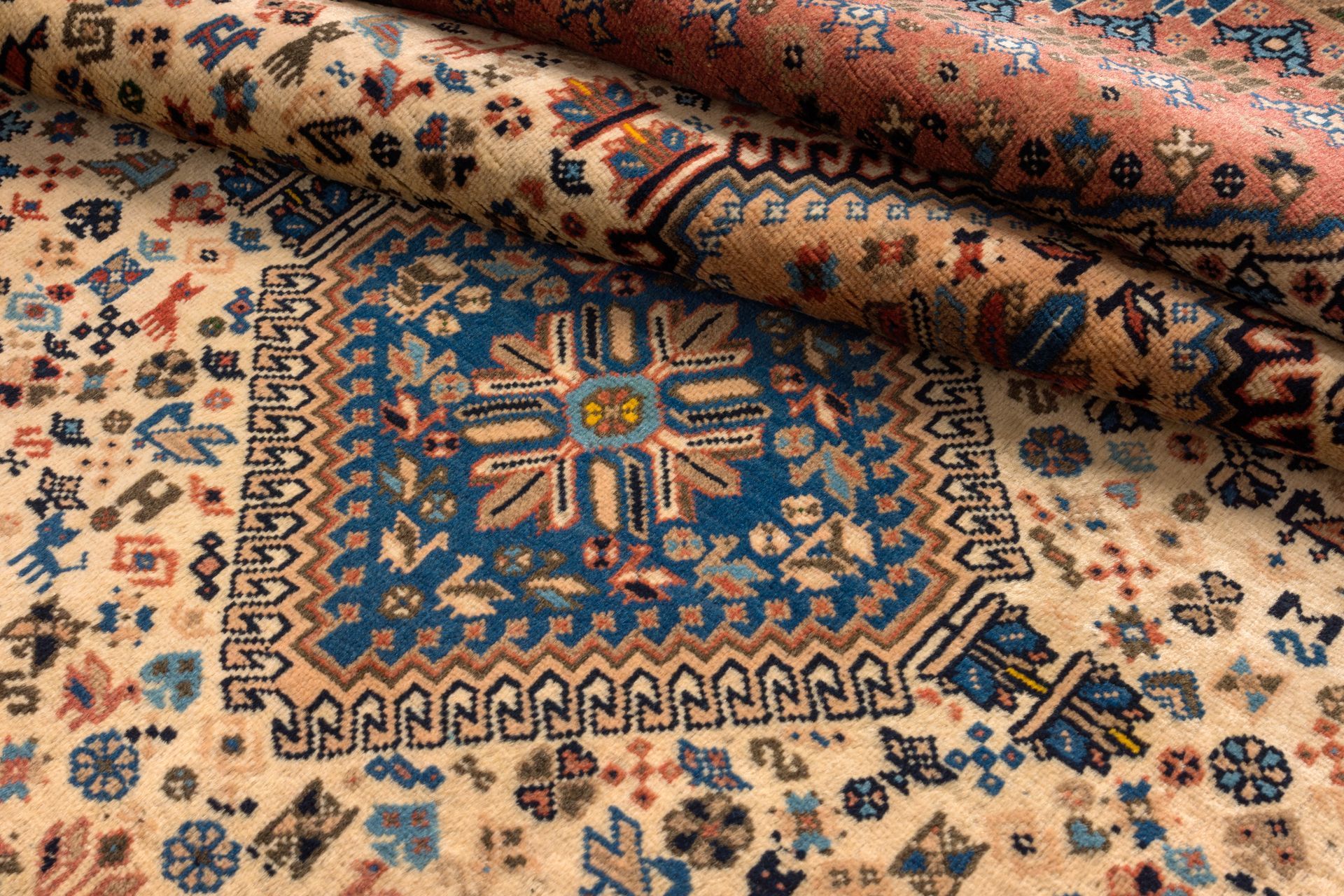
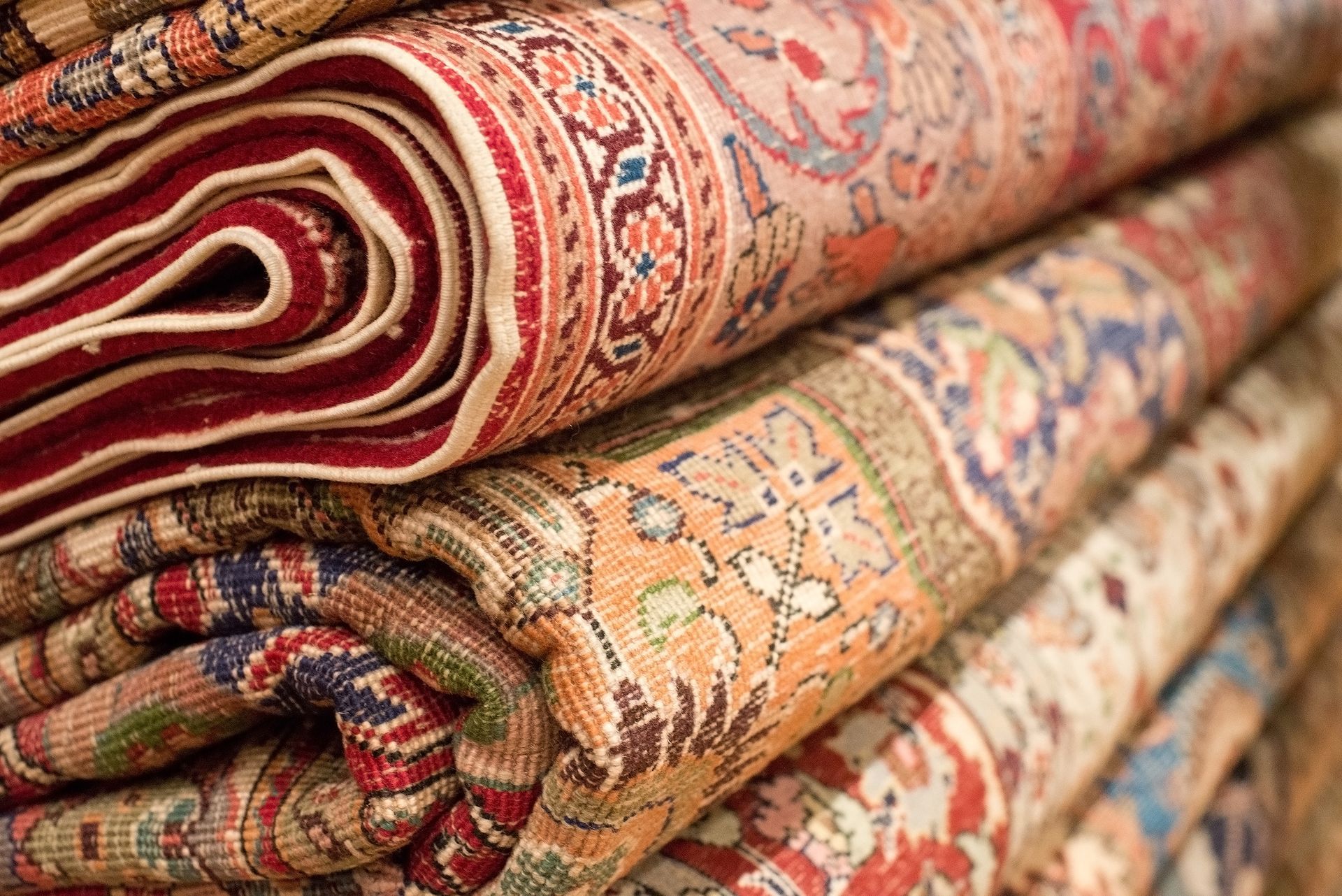
Genuine antique rugs are always hand-knotted, never machine-made. The back of the rug is your clearest window into this. Hand-knotted pieces show slight irregularities on the reverse, with individual knots visible. Machine-made rugs show a perfectly uniform pattern on the back, often with a stiff latex or canvas backing. Running your hand across the underside is one of the simplest tests any buyer can perform.
Older rugs also naturally show lower, more even pile due to decades of wear. Artificial distressing is sometimes applied to new rugs to mimic this, but artificially flattened pile tends to feel uniform in a way that genuine age does not replicate.
Natural Dyes Versus Synthetic Dyes
Dye type can help date a rug with surprising accuracy. Synthetic aniline and chrome dyes became widely available after the mid-1800s. A rug claiming to predate that era should show natural vegetable or insect-based dyes, which produce softer, slightly varied hues rather than uniform brightness.
One field test: moisten a white cloth and rub it gently on the pile. Excessive color transfer may indicate low-quality synthetic dyes. Natural dyes rarely bleed once properly set. A specialist can often identify dye type by the color palette alone, since natural indigo blues, madder reds, and pomegranate golds carry a warmth that synthetic dyes lack.
Color abrash, the subtle horizontal shift in shade across a rug's field, is another useful marker. In genuinely old rugs, abrash results from different dye lots used during weaving. In authentic pieces, this pattern feels organic rather than staged.
Reading Provenance by Region
Persian, Turkish, and Caucasian rugs each carry distinct design signatures:
- Persian rugs from centers like Tabriz, Isfahan, and Kashan typically feature curvilinear floral patterns, medallion layouts, and finely detailed borders, often with high knot counts.
- Turkish or Anatolian rugs tend toward geometric and angular designs with bold primary colors and symmetrical Ghiordes (Turkish) knots.
- Caucasian rugs from regions like Azerbaijan, Armenia, and Georgia are typically tribal in character, with strong geometric motifs, stylized animals, and a bold graphic quality.
Understanding regional traditions helps buyers assess whether a rug's design is consistent with its claimed origin. A rug described as a 19th-century Persian Tabriz with bold geometric tribal motifs, for example, would warrant closer examination, since the two characteristics do not typically align.
Red Flags That May Signal a Reproduction
Several warning signs should prompt caution before any purchase:
- Unusually bright or uniform color throughout the field and border, suggesting synthetic dyes.
- Perfectly even pile with no signs of natural wear patterns.
- A stiff, synthetic backing rather than a woven cotton or wool foundation.
- A seller unwilling to confirm whether a rug is hand-knotted or machine-made.
- Claims of great age without documentation, provenance records, or professional appraisal.
No single red flag is definitive on its own, but a combination is worth treating seriously. When in doubt, a certified rug appraisal is the most reliable step any buyer can take.
Why a Professional Appraisal Makes Sense
A certified appraisal is the clearest path to confidence when evaluating an antique Oriental rug in the Whitefish Bay area. Appraisers examine fiber content, dye composition, knot structure, regional characteristics, and condition to produce a documented assessment that can support insurance coverage, estate planning, or resale. Buyers who have inherited rugs or found pieces at estate sales throughout Milwaukee's North Shore, from Bayside to Fox Point, often discover something unexpected, either greater value or a more complicated history than assumed.
If you are curious about what your rug may be worth, exploring the certified rug appraisal service available to Milwaukee-area buyers is a smart starting point.
Talk to an Expert Before You Decide
Shabahang and Sons Persian Carpets, serving the Whitefish Bay, WI, area and greater Milwaukee, combines seven generations of family expertise with deep knowledge of antique, semi-antique, and vintage handwoven rugs from Persia, Turkey, the Caucasus, and beyond. Contact us to schedule a consultation or bring your rug in for a closer look. Find client reviews on our Google listing to know more about our antique Oriental rugs.